


Our world has seen a big digital transformation that keeps changing our daily lives. This change affects almost every part of our modern lives. It changes how we shop, do business, and connect with others.
The numbers show how big this technological evolution is. By 2022, about 66% of people worldwide used the internet often. This shows how much the digital revolution effects have changed our society.
This big change is more than just new tech and apps. It’s a deep change in how we live and interact. Digital tools have brought both good and bad changes to our daily lives.
Getting to know this social shift technology helps us deal with our world’s growing connections. It’s not just about being convenient. It changes how we make friends, enjoy free time, and handle our personal lives.
How Has Technology Changed the Way We Live Our Lives Through Communication
Our way of talking to each other has changed a lot. We used to write letters, now we send messages instantly. This change has changed how we connect, work, and keep in touch with others far away.
From Postal Services to Instant Messaging
The move from old postal services to instant messaging is huge. We used to wait a long time for replies, but now we expect quick answers online.
This change is not just for fun. It’s also important for work and urgent messages. Apps like Zoom and Skype showed how vital they are, with Zoom getting 2.13 million downloads in the UK during lockdown.
Now, we can talk to people all over the world in real time. This is thanks to technology, which has broken down old barriers of time and distance.
Social Media’s Transformation of Interpersonal Connections
Social media has changed how we make and keep friends. It has created new ways to connect and share experiences. This affects everything from casual friendships to serious relationships.
Related Posts:
- How Technology Connects Us to the World The Global…

- How Long Has Information Technology Been Around The…
- What Does Technology Mean in Economics A Driver of…

- How Technology Improves a Business Streamlining…

- What Does an IT Professional Do Roles and Daily…

- How to Implement New Technology in an Organization A…

Online dating shows this change clearly. Soon, over 50% of couples will meet online. This is changing how we fall in love.
The Evolution of Global Social Networks
Now, we can join groups worldwide based on what we like, not where we live. This has opened up new ways to meet people who share our interests.
These networks help us share cultures and knowledge like never before. We can stay close to loved ones, no matter where they are.
Challenges to Conventional Social Frameworks
But, digital communication also brings problems. It can make us feel overwhelmed and less focused.
Yet, it has also helped those who were once left out. People with disabilities or living far away can now join in conversations and feel included.
Technology keeps changing how we connect with each other. It brings both good and bad changes. Knowing this helps us use technology wisely in our lives.
The Workplace Revolution: Remote Operations and Digital Collaboration
Technology has changed work places, making them more flexible and efficient. This big change affects how we work every day and plan our careers.
The Rise of Distributed Workforce Models
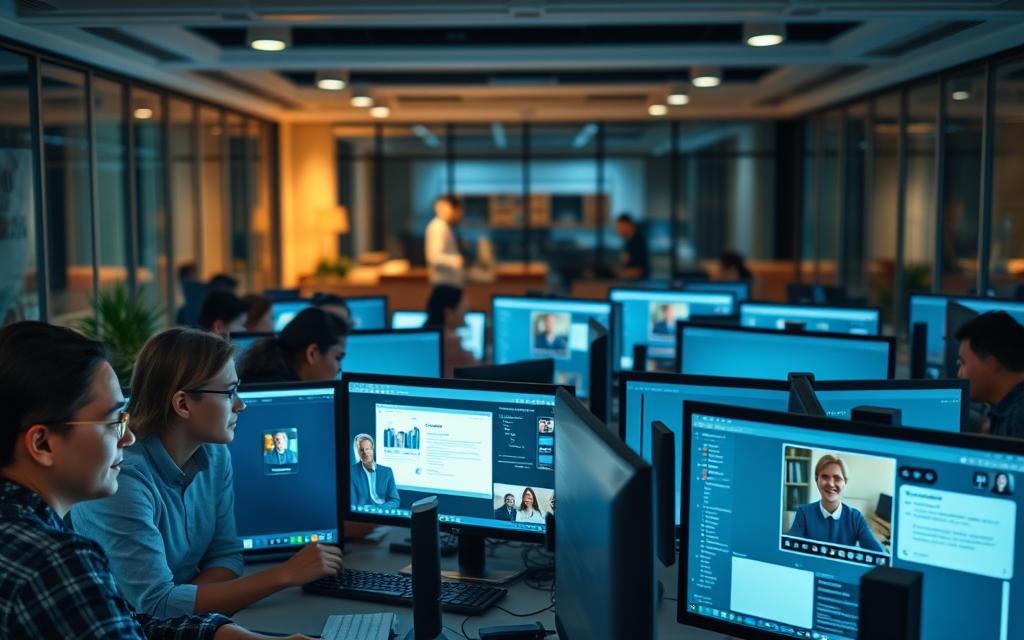
The pandemic made remote work more common, pushing companies to use distributed workforce models on a large scale. By July 2020, about 58% of customer interactions were online, making companies rethink how they work.
Working from home doesn’t mean you’re not productive. Tools for digital workplace collaboration help teams work well, even if they’re far apart. Now, video calls, cloud-based tools, and live document editing are key to work.
Working from anywhere is good for both employers and employees. Companies can find talent worldwide without moving, and workers have more freedom. This setup helps keep work going even when offices can’t.
Automation’s Impact on Employment Landscapes
Automation has changed jobs in almost every field. Some worry it will lead to job loss, but it’s more about changing jobs than getting rid of them.
Automation takes over simple tasks, letting people focus on more complex work. This means workers need to learn new skills and adapt to new work demands.
Artificial Intelligence in Modern Business Practices
AI business integration is key to modern work efficiency. AI handles tasks like customer service and data analysis, often better than humans.
Businesses use AI to understand customer behaviour, making messages more personal. AI can quickly process lots of data, finding trends and opportunities humans might miss.
The best use of AI is as a tool to help humans, not replace them. When used well, AI boosts human abilities, leading to innovation and success.
Essential Competencies for the Digital Economy
To succeed today, you need digital economy skills that match the latest tech. These skills include being able to adapt and keep learning.
Important skills include:
- Data literacy and analytical reasoning
- Digital communication skills
- Being able to adapt to new tech
- Critical thinking and problem-solving
- Working well in virtual teams
Both schools and employers are focusing on these skills. The ability to learn and adapt is now the most valuable skill in a fast-changing world.
In the future, success will come from combining human creativity with tech skills. Those who can adapt and use technology well will do well in this new work world.
Knowledge Accessibility in the Information Age
The digital revolution has changed how we get and use information. It has opened up new ways for learning and sharing knowledge worldwide. This change is one of the biggest impacts of technology on our society today.
Internet as Universal Knowledge Repository
The internet has become a global digital library. It gives us instant access to information that was once hard to find. Now, we can find everything from academic studies to how-to guides with just a few clicks.
This change has helped people who were once left out. They can now find educational resources and connect with others online. UN research shows how digital tools have helped isolated groups share and learn together.
Educational Paradigm Shifts Through Technology
Old ways of learning are changing thanks to digital tools. This digital education transformation lets people learn anytime, anywhere. It’s not just for kids anymore; it’s for everyone.
Digital Learning Platforms and Their Influence
Online learning platforms have changed how we learn. They offer flexible lessons that fit our lives. From big online courses to special skills training, education is now available to millions.
These platforms are also changing schools. Schools are using digital tools to make learning better and reach more students.
Digital Literacy as Fundamental Life Skill
In today’s world, knowing how to use digital tools is key. Digital literacy importance is huge. It means knowing how to find, check, and use online information right.
Digital literacy includes:
- Checking if online info is true
- Using digital tools to talk and work together
- Knowing how to keep personal info safe online
- Keeping up with new tech and platforms
This skill is as important as reading and writing. It helps us use the internet wisely and fully join in today’s world. It lets us make the most of information accessibility technology.
Privacy Considerations in Contemporary Digital Existence
Technology has changed how we live, bringing new privacy worries. Every time we go online, we leave a digital trail. This makes protecting our personal data a big challenge.
Thinking about privacy is key as tech becomes part of our daily lives. Finding the right balance between new tech and keeping us safe is a big topic.
Data Collection Practices and Societal Implications
Data collection has grown a lot from just gathering basic info. Now, companies use smart algorithms to track what we do online.
This big data collection has big effects on society. Our personal info is like money in the digital world, but we might not know it.
There are three main privacy worries today:
- We don’t always know what data is collected
- We’re not always clear on how our info is used
- We have little say in who gets our data
These issues affect not just our privacy but also how society works and who has power.
Navigating the Convenience-Security Equilibrium
Finding the right mix between tech’s benefits and privacy is hard. We often have to choose between getting more from tech and keeping our info safe.
Many online services give us cool features if we share our data. This makes us think a lot about how much we want to share.
To deal with this, we need to be aware and have laws that help. We should know what we’re getting into when we use digital services.
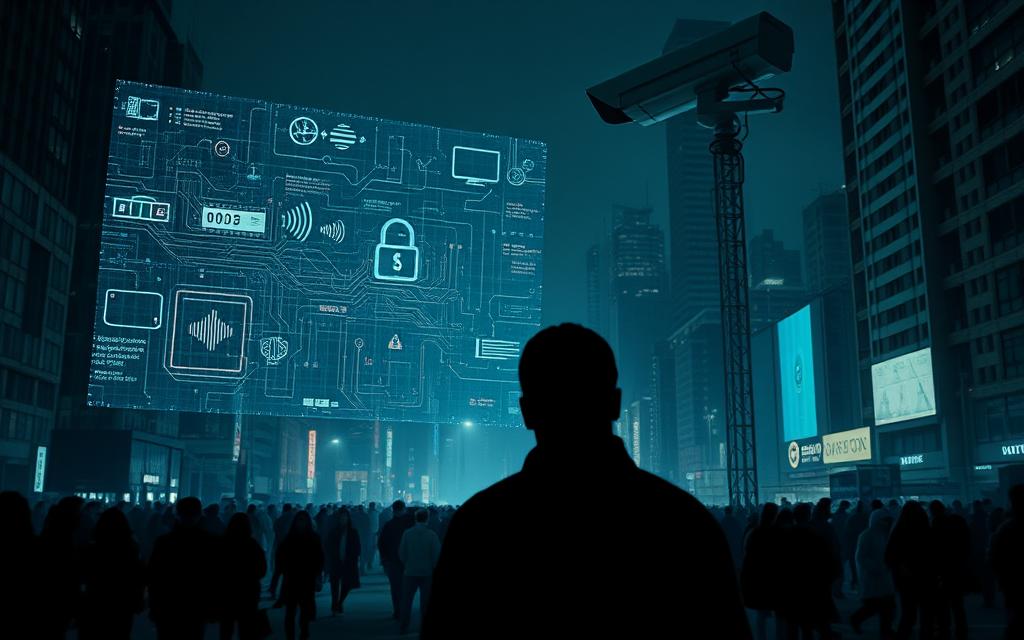
Managing our data on social media is tricky. These sites collect a lot of info about us, like what we like and who we know.
Many social networks make money by using our data for ads. This makes it hard to balance getting good service and keeping our privacy.
Here are some ways to handle social media data better:
- Check and change your privacy settings often
- Share less personal info online
- Be careful with apps that ask for your data
Knowing how platforms work is the first step to controlling our data.
Legislative Measures Addressing Digital Privacy Concerns
Privacy laws have grown to tackle digital worries. Governments around the world have made rules to protect our data.
The European Union’s GDPR is a big step in data protection. Other places have their own ways to keep digital privacy safe.
These laws aim to set standards for handling data and our rights. They cover things like telling us about data breaches, getting our consent, and accessing our data.
Recent laws focus on a few key areas:
- Clear rules for collecting and using data
- Rules for companies to be accountable
- Our rights to our data
| Legislation | Region | Key Features | Implementation Year |
|---|---|---|---|
| GDPR | European Union | Right to be forgotten, data portability | 2018 |
| CCPA | California, USA | Consumer privacy rights, opt-out provisions | 2020 |
| PIPEDA | Canada | Consent-based data collection, accountability | 2000 (updated 2018) |
| LGPD | Brazil | Comprehensive data protection framework | 2020 |
Cybersecurity is closely linked to privacy laws. Good laws need to cover both keeping data safe and protecting it from misuse.
The rules are changing to keep up with new tech and privacy issues. Future laws will likely deal with new tech and its privacy impacts.
Consumer Behaviour and Daily Experience Transformations
Technology has changed how we use products and services. It has also changed our homes. These changes have made our lives more convenient and different from before.
E-commerce Revolutionising Shopping Practices
The e-commerce shopping revolution has changed shopping. Now, we can shop online anytime, anywhere. Next-day delivery is now common.
This change has altered how we shop. We look up products online, read reviews, and compare prices. The old way of shopping is gone.
Smart Home Technologies and IoT Integration
Smart home technology impact goes beyond making things easier. It makes our homes respond to us. It controls things like the temperature and security.
The IoT daily life integration has made our homes smarter. Devices work together silently. They make our lives easier and save energy and money.
Here are some examples of IoT in our homes:
- Voice-controlled lighting and entertainment systems
- Refrigerators that track expiration dates and create shopping lists
- Security cameras with facial recognition capabilities
- Energy systems that learn usage patterns to reduce costs
Streaming Services Reshaping Entertainment Consumption
The streaming entertainment transformation has changed how we watch TV. Now, we can watch anything we want, anytime. This has changed how we find and enjoy shows.
This change has led to binge-watching. It has also changed how shows are made. Shows are now made for continuous watching, not weekly episodes.
Digital Banking Transforming Financial Management
The digital banking evolution has moved banking to our phones. Mobile apps let us manage our money anytime. They offer tools for budgeting and tracking spending.
This change has made us more aware of our money. We can see our spending and savings easily. This helps us manage our finances better.
Modern banking apps offer:
- Real-time transaction notifications and categorisation
- Automated savings tools that round up purchases
- Investment platforms with beginner-friendly interfaces
- Instant fraud detection and resolution systems
These changes are more than new technology. They show how we think about shopping and our homes differently now.
Conclusion
Our detailed look at technology shows how it has changed our lives. It has made talking to each other, working, and learning easier. But, it also brings problems like privacy and security issues.
The future of technology looks bright but comes with big challenges. It will change how we live, work, and interact with each other. We need to think carefully about how to use new technologies like AI and IoT.
It’s important to use technology wisely for a better future. We should enjoy the benefits of new tech while keeping our safety and well-being in mind. Finding the right balance is key to a good digital society.
Our journey with digital change is ongoing. We need to be smart and careful in how we use technology. The choices we make now will shape the future and how technology affects us.
FAQ
How has technology reshaped daily routines and social interactions?
Technology has changed our lives a lot. It has made digital tools part of our daily activities, like talking and shopping. Now, over 60% of the world uses the internet. This has made messaging, social networking, and online shopping easy and fast.
What impact has digital communication had on interpersonal connections?
Apps like WhatsApp, Facebook, and Twitter have changed how we talk to each other. They let us connect with people all over the world quickly. But, they also make us talk less face-to-face and can affect our mental health.
How is technology changing the modern workplace?
Technology has brought big changes to work. Now, we can work from anywhere thanks to tools like Zoom and Slack. Automation and AI are also changing jobs, making skills like data analysis and digital literacy important.
In what ways has the internet transformed education and knowledge access?
The internet is a huge source of information. Sites like Khan Academy and Coursera have changed how we learn. But, it also means we have to be careful about the information we find online.
What are the key privacy concerns in today’s digital age?
More data is being collected online, raising privacy concerns. Laws like the GDPR in Europe try to protect us. But, data breaches and misuse are big problems, making it hard to balance safety and convenience.
How has technology influenced consumer behaviour and daily experiences?
Online shopping, smart homes, streaming, and digital banking have changed how we live. Amazon and Netflix have changed how we shop and watch movies. IoT gadgets make our homes more connected to technology.
What skills are essential for thriving in the digital economy?
To succeed today, you need skills like digital communication and data analysis. Being adaptable and able to think critically is also important. These skills help you keep up with technology and find opportunities in work and life.
How do streaming services and digital banking alter daily life?
Services like Netflix and Spotify have made entertainment easy to access. Digital banking apps, like Monzo and Revolt, make managing money simple. They help us use technology in our daily lives.