
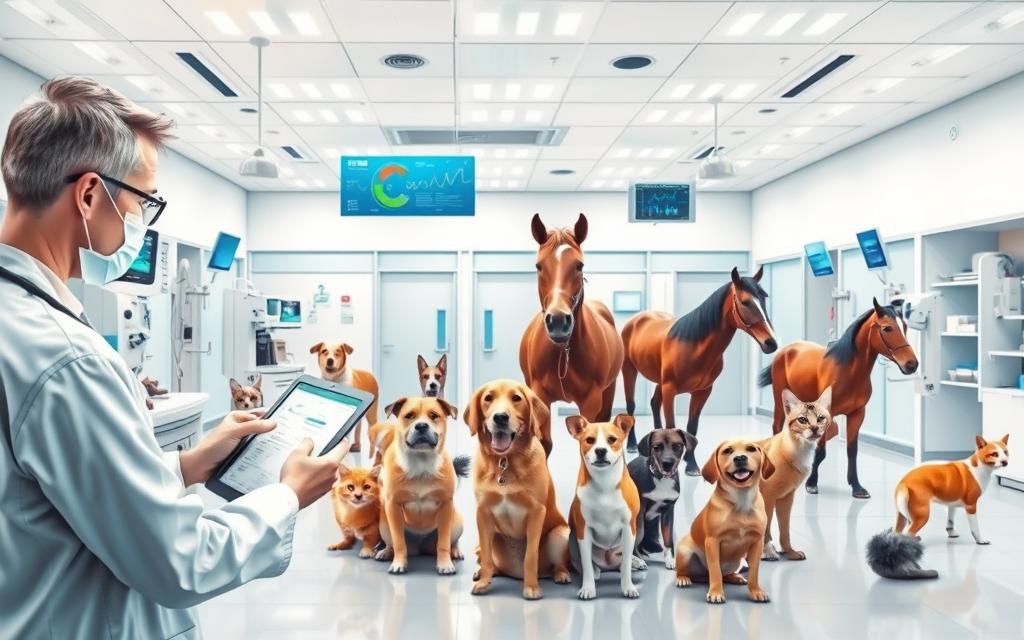
Modern veterinary care depends on experts who give vital technical help. These skilled people are key to good veterinary care support systems.
Animal health technologists and veterinary technicians help vets a lot. They take care of animals and help with tests.
They work in many places like clinics, hospitals, and labs. They play a big part in helping animals get better and in animal welfare.
The animal health technologist role is very important in animal healthcare today. This field keeps getting better with new animal healthcare technology.
Knowing about this job shows how complex modern vet medicine is. These technicians make sure animals get the best care in many settings.
Understanding What Is Animal Health Technology in Contemporary Veterinary Practice
Modern veterinary technology starts with a solid education. Most animal health technologists finish two or three-year college courses. They must also pass national exams to work.
In many places, they need to register with animal health technologists’ or veterinary technicians’ associations. This ensures they meet high standards.
The Evolution and Development of Veterinary Technology
Veterinary technology has changed a lot. It used to be simple, but now it’s very advanced. Early tools were basic, but now we have sophisticated equipment.
Related Posts:
- What Does an IT Professional Do Roles and Daily…

- How Technology Changed the Way We Live A Social and…

- How Long Has Information Technology Been Around The…

- How Technology Improves a Business Streamlining…

- How to Implement New Technology in an Organization A…

- What Does Technology Mean in Economics A Driver of…

As technology improved, so did education. Colleges now teach how to use advanced tools. This has made animal health professionals very skilled.
The growth of veterinary technology is like human medicine’s. But it deals with animal health issues. Today, veterinary technologists use equipment as advanced as in human hospitals. This shows how fast veterinary technology is evolving.
Core Components of Modern Animal Health Technology Systems
Today’s veterinary practices use systems that combine old and new technology. These modern animal health systems work together for better care. They make diagnosis and treatment more effective.
Diagnostic Equipment and Medical Instruments
Modern vet practices have top-notch diagnostic medical instruments. They use digital radiography for quick, safe images. Ultrasound lets them see inside animals without surgery.
Endoscopes let them look inside without surgery. Advanced monitors keep an eye on animals during and after treatment. These tools are key to today’s vet tech.
Digital Records and Practice Management Software Solutions
Electronic health records have changed how vets manage patient info. Practice management software handles scheduling, billing, and records all in one. This is a big part of the digital revolution in animal health.
Cloud-based systems let vets access records from anywhere. Automated reminders help with appointments. Inventory management keeps track of supplies and meds.
These digital tools work with the physical ones to give a full picture of a patient. This mix of old and new defines today’s vet practice. It ensures the best care for animals and makes practices more efficient.
Essential Diagnostic Technologies Revolutionising Veterinary Care
Modern veterinary medicine has seen big changes in how we diagnose and treat animals. These new tools help us spot problems early and treat them better.
Advanced Medical Imaging Systems
New imaging technologies are key in today’s vet care. They let us look inside animals without hurting them. This gives us important information without causing pain.
Digital Radiography and X-ray Equipment
Digital radiography is a big step up from old X-rays. Digital radiography equipment gives us clear images right away. These can be improved and shared easily.
Vet techs use these systems to get detailed pictures of bones and organs. This tech cuts down on radiation and makes diagnoses more accurate.
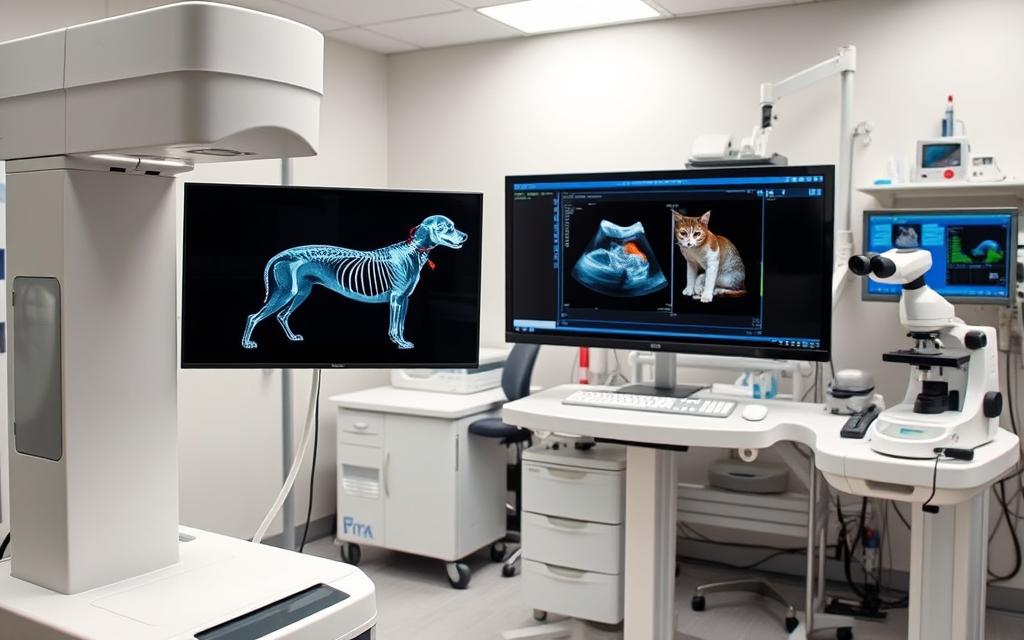
Ultrasound lets us see soft tissues and organs in real time. Vets use ultrasound MRI applications for checking pregnancies, looking at the belly, and checking the heart.
Magnetic resonance imaging gives us detailed views of inside the body. It’s great for looking at the brain and soft tissues.
Laboratory Analysis and Diagnostic Equipment
Labs are key for accurate vet diagnoses. Modern laboratory analysis equipment quickly and precisely tests biological samples.
Animal health techs take and test blood, tissue, and fluids. They use machines to check organ function, infections, and metabolic issues.
Tools like hematology analysers and biochemistry machines give fast results. This helps vets make quick treatment plans, improving animal care.
These veterinary diagnostic technologies have set a new standard in care. They help vets make accurate diagnoses and plan treatments.
This tech change is truly revolutionary veterinary care. It combines precise diagnostics with caring for animals. As these systems get better, so will vet care in the future.
Digital Practice Management Solutions for Veterinary Clinics
Modern vet clinics use advanced digital systems to improve care and efficiency. These systems change how animal health techs manage their work. They need to be tech-savvy and good at talking to people.
Electronic Medical Records Management Systems
Electronic medical records are key in today’s vet care. They keep all patient info in one place. This makes it easy for staff to access medical histories.
Animal health techs use these systems every day. They enter test results and update treatment plans. They need to be accurate in recording clinical details.
These records help keep care consistent between visits. They also help make quick decisions in emergencies by providing fast access to patient info.
Appointment Scheduling and Client Communication Platforms
Good appointment scheduling platforms change how clinics plan their days. They cut down on paperwork and make clients happier with timely reminders.
Animal health techs use these tools to plan patient visits and follow-ups. They also help with talking to clients about care and treatments.
These digital clinic management solutions make things run smoother and improve client relationships. They help keep communication steady while handling busy schedules.
Inventory Control and Pharmacy Management Systems
Advanced pharmacy systems keep track of meds and inventory. They monitor drug levels, expiration dates, and who gets what. This is all done with high accuracy.
Animal health techs count on these systems to keep meds stocked and avoid waste. They get alerts when it’s time to restock or when meds expire.
These systems link up with patient records for a full treatment history. This helps with safe medication use and keeps the clinic safe.
Today’s veterinary practice management tech is more than just tools. It’s a network that boosts both care quality and clinic efficiency in animal health.
Telemedicine and Remote Health Monitoring Technologies
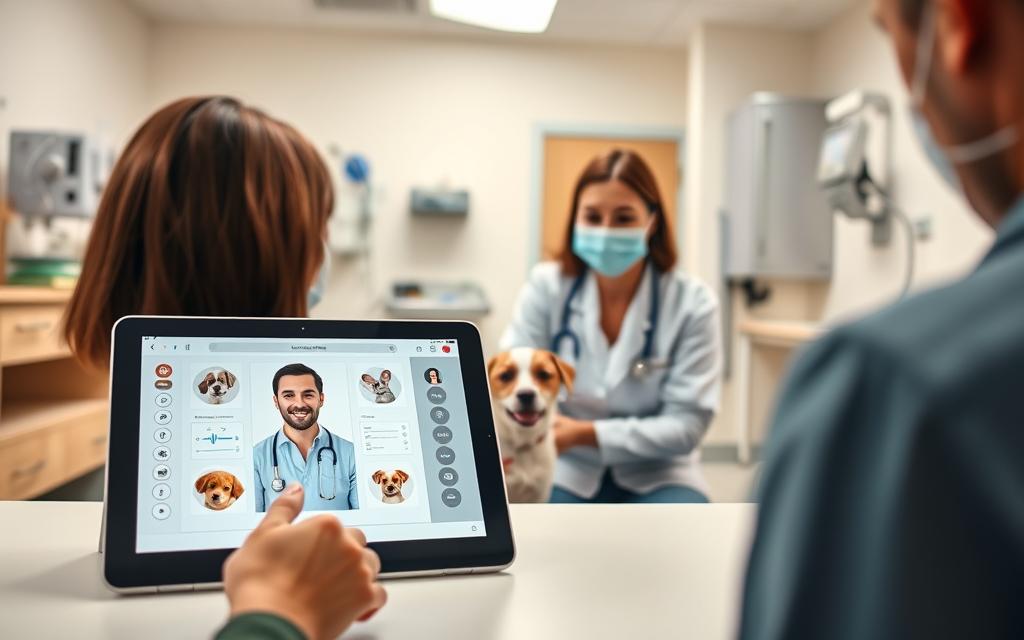
Modern veterinary care now goes beyond the clinic. New technologies help manage animal health all the time. They let animal health technologists support pets through digital channels and remote monitoring.
Virtual Consultation and Telehealth Platforms
Veterinary telemedicine platforms have changed how care is given. They offer live video chats. This lets technologists check on pets and teach owners about care at home.
These platforms have many useful features:
- Secure video chats with clients
- Online prescription management
- Sharing educational resources
- Scheduling follow-up chats
This tech is great for first checks and ongoing care. It helps reach pets in far-off places.
Wearable Health Monitoring Devices for Companion Animals
The market for wearable pet devices has grown a lot. These devices help track pets’ health from afar. They give technologists the info they need to give tailored advice.
Activity and Wellness Tracking Collars
Activity tracking collars keep an eye on how much pets move, sleep, and act. They spot changes that might mean health problems.
Technologists use this info to suggest the right exercise and catch early signs of issues like arthritis or obesity.
Specialised Medical Monitoring Equipment
Advanced specialised medical monitoring gear tracks specific health issues. It includes:
- Cardiac monitors for heart issues
- Glucose monitors for diabetic pets
- Trackers for pets recovering from surgery
This tech helps with therapy by showing how pets are getting better. It lets technologists tweak treatment plans based on current health data.
These new ways in remote health monitoring change how vets care for pets. They make ongoing health care easy and effective for pet owners everywhere.
Conclusion
Animal health technology has changed how we care for animals. It makes diagnosis more accurate and treatment better. Digital systems, advanced imaging, and remote monitoring tools are key to this change.
The future of veterinary care is exciting, with new technologies coming in. Animal health technologists have many career paths to choose from. They can work in clinics, hospitals, research labs, or government agencies.
There are many chances for growth and learning in this field. As technology gets better, so does the role of animal health technologists. This helps improve care for animals all over the world.
FAQ
What is animal health technology and how does it support veterinary care?
Animal health technology uses special tools and systems to help with animal health. Technologists and veterinary technicians use these tools in clinics and hospitals. They help make veterinary care more precise and efficient.
How has veterinary technology evolved over time?
Veterinary technology has grown a lot. It now includes advanced tools and digital records. Technologists learn about these in college and get registered to work in the field.
What are the core components of modern animal health technology systems?
Modern systems have physical and digital tools. These include X-ray machines and electronic records. They work together to improve care and efficiency.
Which diagnostic technologies are most impactful in veterinary medicine today?
Important tools include X-rays, ultrasound, MRI, and lab analysers. They help see inside animals and test samples. This makes diagnosis and treatment better.
How do digital management systems benefit veterinary practices?
Digital systems make tasks easier and improve communication. They help manage medicines and supplies. These systems are key to modern clinics.
What role does telemedicine play in modern animal healthcare?
Telemedicine lets vets consult remotely. It helps with education and monitoring. This technology supports preventive care and chronic management.
What career opportunities are available for animal health technologists?
Technologists can work in many places. They can move up to supervisory roles or specialise. There are also chances to work with new technologies.
Are there specific educational requirements to become an animal health technologist?
Yes, you need a two- or three-year college programme. After that, you must register with a professional body to work.
How do electronic medical records improve patient care in veterinary settings?
Electronic records keep patient information up to date. They help teams make better decisions. This leads to better health for animals.
What are some examples of wearable health monitoring devices for animals?
Devices like activity trackers and collars monitor vital signs. They are great for managing chronic conditions and tracking health outside clinics.